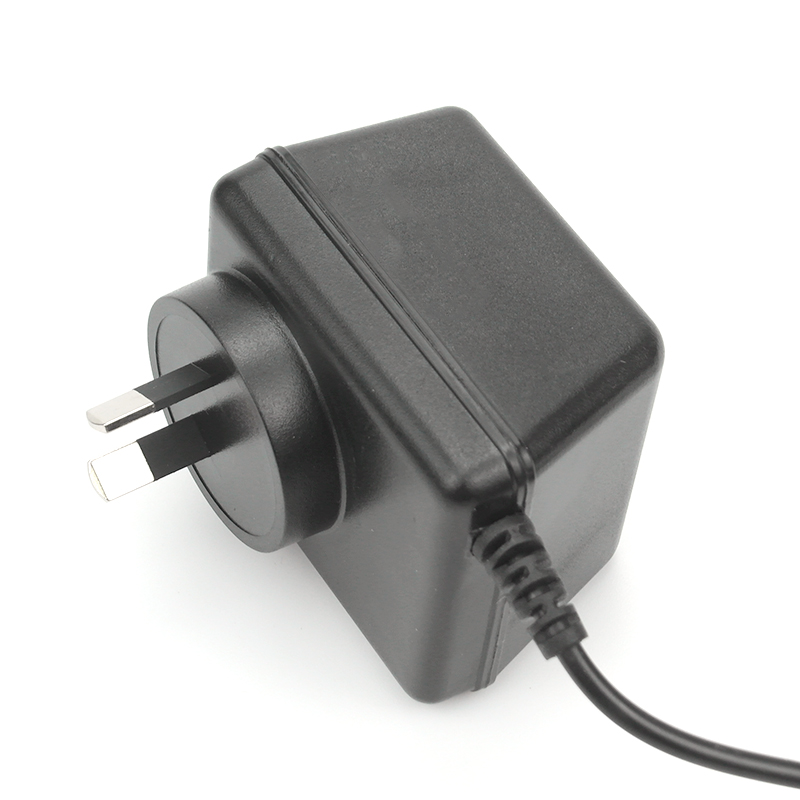
The power adapter steps down the alternating current (AC) to a low-voltage direct current (DC) through a transformer, and then converts the low-voltage AC to DC through rectification and filtering circuits in order to provide it for use by the electronic device. Specifically, when the AC power is received at the input of the power adapter, the control circuit will adjust the turns ratio of the transformer coil by pulse width modulation or pulse sequence modulation technique according to the preset output voltage, thereby changing the size of the output voltage. At the same time, the control circuit will also adjust the duty cycle of the signal according to the output voltage and current to keep the output voltage stable. In order to protect the circuit from overvoltage, overcurrent and other abnormal conditions, the power adapter also has a variety of protection circuits.

The components of the power adapter and its role
Power adapters are generally composed of components such as shells, transformers, inductors, capacitors, control ICs, PCB boards and so on. Its working principle includes the following steps:
- Energy input: the power adapter connects to the socket through an electrical plug to receive 100-240V AC.
- Energy conversion:
- Transformer: step down the high voltage alternating current to a suitable voltage level.
- Rectifier circuit: converts the AC current into a unidirectional high voltage DC current.
- Filter circuit: removes high-frequency noise and ripple from the current to make the output current more stable.
- Voltage regulator circuit: regulates the output voltage to ensure stable voltage.
Application of power adapter in different devices

Power adapters are not only used in laptops, but can also support devices such as tablet PCs and mobile phones. As long as the communication protocol is compatible, the power adapter will use its proprietary conversion chip and control circuit to change the output voltage and power according to different load requirements. For example, devices such as 20V laptops, 9V mobile phones and tablets can be charged and used with the appropriate power adapter.